It is always a good idea to hire a Certified Arborist to look at the trees on a property before you buy, that is, during the "due diligence" period. If there are trees with problems, the inspection could make the difference between stopping the purchase or going through it. Or it could mean that you, rather than the seller, will pay for removal of an unsafe tree after you move in. Tree removal can be a hefty bite in your "house poor" budget.
Here are some things the arborist will be looking for:
- Are any of the trees dead, diseased, or dying?
- Are there areas in the tree or major branches that are hazardous?
- Are the trees too close to the house?
- If construction is planned after the sale goes through, how might it impact the trees?
- Are a tree's roots disturbing the foundation or driveway?
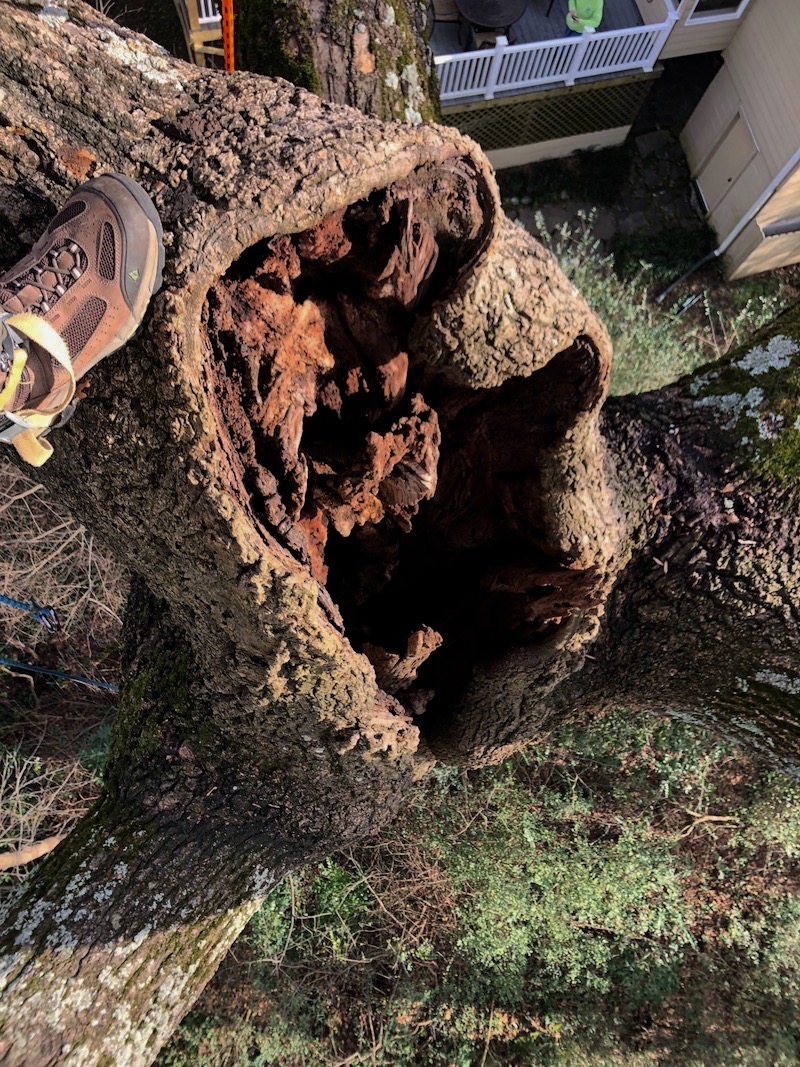
From the ground, this huge tulip tree near the home looked completely healthy. But when the homeowner casually mentioned he had seen a raccoon in the tree, our arborist knew he had to climb up to find out why. Look at the cavity he found! Massive decay going deep into the trunk is a great place for a raccoon to raise its young, but it makes the tree very dangerous!
A removal like this will cost thousands of dollars, likely changing the terms of a home purchase. Get the trees inspected before you sign a contract. Otherwise, you might be stuck with a very expensive tree job.
Most municipalities require that a Certified Arborist review your plans before they will give you a permit to add on to your home or build a new one. However, it is usually helpful to get a Certified Arborist out as early as possible in the planning process, even before the permitting stage begins. Why? Occasionally the arborist's suggestions to build around trees rather than removing them causes the homeowners to think again about the design of a project.
If tree removal is required as part of your plan, the arborist will write a "prescription" of steps the builder must take to help your trees survive the effects of construction. For example, an arborist will identify and clearly mark critical root zones of trees to prevent the roots from damage.
Sometimes we are called for advice about other construction-related projects, too. By offering alternative construction methods, we can save your special tree. Here are four examples.
-
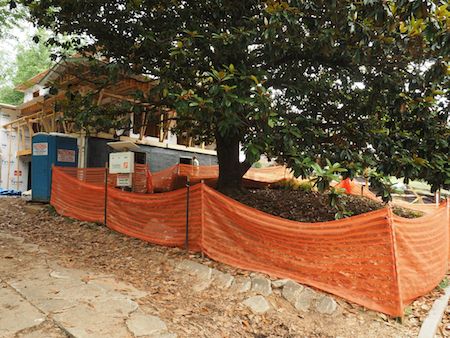
New Home
This temporary fence around the magnolia tree will save it from damage during construction of the home. -
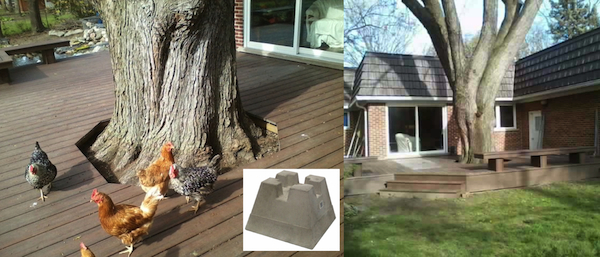
Deck
By using concrete blocks, this lovely deck could be built, and modified when needed, without interfering with the tree's roots.
(Picture courtesy Marge Lisius) -
Path
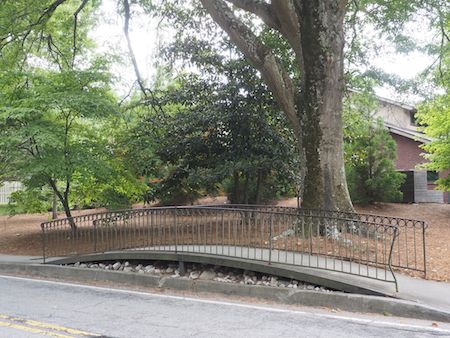
This "bridge" over the sidewalk on Houston Mill Road is an excellent example of how a path or driveway can be built to preserve the roots of a tree. We can advise you about how to accomplish this. -
Treehouse
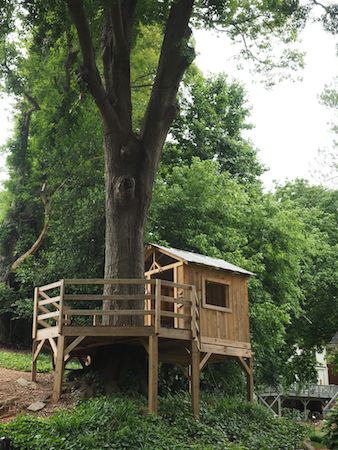
These homeowners were very careful when they built their treehouse around the tree.